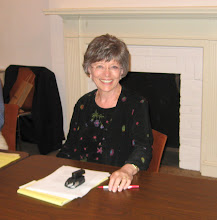
Well, I am really pleased at my project to avoid stagnation in retirement that I started recently. Even though retirement is a year and a few months away, it was good to start it early so that we know what is out there and to get into the groove of things. We have joined 2 book clubs and that has forced us to step out of the usual material that we read. Brian has gone beyond reading just history and economics/finance and has actually read TWO novels and is reading Water for Elephants right now. I have stepped out of my mystery comfort zone as well, although my reading habits were always more eclectic than his and included non-fiction. Goodreads has been a great way to track readings and check on people's reactions to books. One of the most amazing two I read were The Soloist and The Girl with the Dragon Tatoo, among others.
The dining and wine and empty nesters groups have proved a new way of meeting like minded people. And I am really looking forward to the group run by Chef Drummond of the Continental and the culture groups.
The family membership at the museum is a fabulous source of new and exciting knowledge. We went to a tour of Japanese decorative arts and learned a great deal from the wonderderful docent who spoke and we came away with a whole new appreciation of Japanese art. Before, we would have looked at it and simply said it was pretty or interesting. We're doing the Raja exhibit this week followed by the orchestra which is always a joy.
The Polish lessons are paying off, although those are coming to an end soon. They have proved super in terms of corresponding coherently with my family in Poland.
We've been seeing a lot of performances that we wouldn't have seen without the push of the "project in progress". Walnut St. Theater's The Prince got terrible reviews, but it was actually a great little 2 man play about a Vince Fumo type of politician. Very entertaining and enlightening. We look forward to Travel's with my Aunt.
There's also a fine LGBTF place here called the Nevermore and the people are very inclusive and fun. The guy who owns my beauty parlor urged me to come to events there and we have been delighted with the reception. We've been to some super wine tasting meals and shows there. All in all, we just have to keep up the momentum. This is life beyond your job, kids and grandkids -- although I would never give up the latter two! Just got back from N.C. and will be watching Alina next weekend. Look forward to Shannon and Jon's visit in March when we plan to go to trivia night at Via Ponte among other fun events. Life is awfully good when you stretch.
Tuesday, February 23, 2010

Sunday, February 21, 2010
Meetings ARRGGHH!
Another reason to be retiring: Meetings. Meetings are the bane of academic culture. Meetings, in academe, are inefficient, intrusive, ego-tripping power grabs. Political types love meetings. Lonely people love meetings. Get-a-Life types love meetings. Non tenured brownnosers love meetings. I qualify as none of the above. For every ten meetings I get sucked into, one is necessary. Meetings are usually initiated by people who have nothing better to do with their time – people who demand to be the bull’s-eye of attention. At work, I duck all the meetings I can because I am anal about getting work done, and for each minute or each hour I spend in a useless meeting, that's one minute or one hour where my very necessary work doesn't get done. I attend meetings – all the time – wherein people gab for the sake of gabbing, and demand center stage for the sake of attention and ego tripping. Most people who run meetings lose control of the meetings. Often people who babble in meetings do not engage their brains before speaking and talk about things that are not on task or on the agenda, and the person running the meeting has no idea how to redirect the person or simply say: “We can put that on the agenda for next week if you like.”
Then there are meetings that do not start on time and meetings to which the chronically tardy are consistently late. Such lateness may not be some kind of passive-aggressive statement, but it can be a pain for several reasons. Let’s take the meeting. First of all, I came to the meeting on time and had to sit through the introductory remarks which can often be a boring rehash of previous info. Then here comes the Late Great Meeting Attendee ten minutes late and we have to start all over and I have to hear the rehash rehashed. I have a very low threshold for boredom so this is excruciating for me. I’m also on a tight schedule scholarship wise as well and would like to get in and get out of the meeting as quickly as possible. Also, and maybe it’s just me, but isn’t there a measure of arrogance attached to someone who doesn’t seem to be bothered with the same time constraints everyone else in the room deigned to obey? Is anyone so important they can consistently waste the time of their co-workers?
Then there are meetings that do not start on time and meetings to which the chronically tardy are consistently late. Such lateness may not be some kind of passive-aggressive statement, but it can be a pain for several reasons. Let’s take the meeting. First of all, I came to the meeting on time and had to sit through the introductory remarks which can often be a boring rehash of previous info. Then here comes the Late Great Meeting Attendee ten minutes late and we have to start all over and I have to hear the rehash rehashed. I have a very low threshold for boredom so this is excruciating for me. I’m also on a tight schedule scholarship wise as well and would like to get in and get out of the meeting as quickly as possible. Also, and maybe it’s just me, but isn’t there a measure of arrogance attached to someone who doesn’t seem to be bothered with the same time constraints everyone else in the room deigned to obey? Is anyone so important they can consistently waste the time of their co-workers?
Thursday, February 11, 2010
Learning Polish
I have spoken fluent and fairly literate Polish all of my life. Funny that my brother’s Polish is awful, yet mine is clear and precise – although I will be the first to admit that I need an infusion of vocabulary and I do stumble sometimes in conversation. I have always wondered about the discrepancy as we were both raised in the same Polish household. I sent him a copy of Henryk Sienkiewicz’s trilogy to watch and he was unable to negotiate the formal Polish – an interesting state of affairs. I can only surmise that I have the head for languages and I like languages. One pays attention and places importance upon that which interests them. Recently my involvement in the Polish community in Philly and environs and watching Polish TV has probably helped my vocabulary as well. It has also given me a great appreciation for the formal language and its beauty – sort of like listening to formal English when correctly pronounced.
We are planning on a family reunion in Sandomierz and in preparing to join my extended family at this event I have started taking internet classes on reading and writing. After all, the onus will be on me to translate spoken and written. Although I suspect that my neices and nephews will be able to negotiate quite well in English with their cousins.
Needless to say, Shannon, who does EVERYTHING precisely and in-depth and who has an innate curiosity about the world and learning whatever she can, has started investigating all things Polish and even joined the local Polish American group. Tara is more laissez faire about life in general and makes fun of her sister’s seriousness – although she herself has many hobbies and interests.
Anyway, I digress. My self-improvement in this area has taught me more than just the fact that I need better vocabulary and to quit mixing up my “z-s.” It has reinforced a number of concepts. I post them here because I know my kids read my blog.
In the Polish language there is great complexity when dealing with forms of address. Polish IS a very formal language. And people may take offense when they’re not addressed properly. A few months ago I was out with a group of friends and strangers, foreigners and Poles. I chatted with one lady in English, turned out she was Polish, so I switched to Polish. Because in English, I addressed her as “you”, I didn’t even think twice about using the same form in Polish – “ty”. She was my age, yet her response was an icy stare and an even icier “Ja z tobą krów nie pasałam” (I didn’t tend cows with you) which is a nasty warning to a person talking to you (me in this case) that he/she has breached the Pan/Pani barrier. OOPS! Apparently, that means you’re only allowed to use “you/ty” to people with whom you were tending cows at some point in the past, or somesuch. So, how do you maneuver this minefield of Polish courtesy expressions? I asked several people and got several answers. This is more or less the general consensus:
• 1. If you don’t know someone, address them as Pan/Pani (Sir, Madam) until you know them well and have a mutual agreement that you will switch to the informal you/ty.
• 2. Within your family it is generally ok to use the you/ty except that the “intelligentsia” older generation Poles do not address their elder family members (father, mother, aunt, uncle etc.) in the familiar either. This is probably a generational thing. There are also some complex exceptions to the family as well. In some instances one uses the third person when addressing older relatives. OY!
• 3. If the person you’re addressing is much, much younger than you, then you’re safe using the familiar.
Diminutives are very popular in Polish (and are by no means reserved for children). The Polish language allows for a great deal of creativity. Most diminutives are formed by adding a suffix. Male names it may be -ek or the more affectionate -uś; for female names it may be -ka, or -nia / -dzia / -sia / cia respectively. For example, Maria has a particularly great number of possible diminutives, which include: Marysia, Maryśka, Marysieńka, Marychna, Mania, Mańka, Maniusia, , Maryna, Marianna.
The Polish language is also undergoing radical changes because of the sudden globalization movement and open boundaries. New areas of technology, new concepts, and continuous innovations bring into life new vocabulary, which gets quickly adopted in all kinds of languages around the world. This process, vigorously opposed to in some countries for the language impurity, is enthusiastically embraced in other counties. In case of Poland, there are probably as many supporters as there are critics of the new trends in Polish language. Sort of like the French and the battle in France and Quebec against the encroachment of English.
The formal literary Polish language (a beautiful thing when one knows what to listen for) is usually very carefully revised and approved by linguistic experts. They test new expressions for compliance with existing rules that regulate what is correct or incorrect in Polish native tongue. While up to a decade ago, the language was changing in a very slow motion; the last several years abounded with incredible invasion of new foreign phrases and terms to define the progress that has come from the West. There are words like shop, weekend, link, Internet, show business, gay, email, etc. that surround people everywhere and force a foreign language upon them. Now, the Polish language experts face a great challenge. How do those foreign words behave in Polish language? Should they be spelled as the original spelling calls for, or should they be spelled as the sounds are heard, which is commonly known by Poles? But if they are spelled in accordance to the sound rule, so "the show business" becomes "szoł biznes", or "weekend" becomes "łikend", there lurk other conflicts. In formal Polish language, some letters don't follow others. For instance, "ł" is never followed by "i", thus "łikend" is not an option. On the other hand, there are no easy ways to get a widely acceptable Polish translation for those new concepts. While weekend means the end of a week and as such could be translated word for word, the Polish translation is long and not as precise as weekend can be. Similar is a case with other words, such as email and business or even funnier – cell phone (cell as in the unit of biology is komura and Poles have literally translated cell phone into the word “komurka” or “telefon komurkowy.” Although, there are a couple of linguistic Polish versions of business to express the same concept, most of them are long and not as easy to say as biznes is. Some words, like email, are an ultimate challenge since there are substitutes for them in formal Polish language. Hence “imejl.” Holy cow! Or “gej” – double holy cow. And again there is the word for “HIV” which is “chif” -- pronounced "heef" (there is rarely a stand alone h and traditionally no “v.” Oh my!
Finally, the issue of rude or vulgar words is important. Polish curse words are very strange. Cholera – meaning just what it is – the disease of cholera would not be a rude word in English but it is in Polish – analogous to shit. Parenthetically, I learned the other day that in Italian curse words are frequently related to churchy issues – so in Italian a curse word might be the word for chalice. Odd, but it might reflect the Italians' view of the Catholic church. Who knows.
One of the very most rude and vulgar words is one that we don’t spend much time thinking about. It is the word for “whore” – kurwa. Even worse is “kurwa twoja macz.” So far as I can see both are summarily beeped out of even the raciest programs on Polish TV on the rare times they manages to come up. Admittedly they are ugly word to hear, sort of like f—k and its derivatives, but why the word for whore receives special censorship is odd to me, although I do remember neither my mother or father using the word in front of me. They did use a lot of cholera, occasionally prefaced by the adjective “jasny” meaning light or bright. Hence bright cholera.
So enough of my thoughts and back to my self-improvement efforts.
We are planning on a family reunion in Sandomierz and in preparing to join my extended family at this event I have started taking internet classes on reading and writing. After all, the onus will be on me to translate spoken and written. Although I suspect that my neices and nephews will be able to negotiate quite well in English with their cousins.
Needless to say, Shannon, who does EVERYTHING precisely and in-depth and who has an innate curiosity about the world and learning whatever she can, has started investigating all things Polish and even joined the local Polish American group. Tara is more laissez faire about life in general and makes fun of her sister’s seriousness – although she herself has many hobbies and interests.
Anyway, I digress. My self-improvement in this area has taught me more than just the fact that I need better vocabulary and to quit mixing up my “z-s.” It has reinforced a number of concepts. I post them here because I know my kids read my blog.
In the Polish language there is great complexity when dealing with forms of address. Polish IS a very formal language. And people may take offense when they’re not addressed properly. A few months ago I was out with a group of friends and strangers, foreigners and Poles. I chatted with one lady in English, turned out she was Polish, so I switched to Polish. Because in English, I addressed her as “you”, I didn’t even think twice about using the same form in Polish – “ty”. She was my age, yet her response was an icy stare and an even icier “Ja z tobą krów nie pasałam” (I didn’t tend cows with you) which is a nasty warning to a person talking to you (me in this case) that he/she has breached the Pan/Pani barrier. OOPS! Apparently, that means you’re only allowed to use “you/ty” to people with whom you were tending cows at some point in the past, or somesuch. So, how do you maneuver this minefield of Polish courtesy expressions? I asked several people and got several answers. This is more or less the general consensus:
• 1. If you don’t know someone, address them as Pan/Pani (Sir, Madam) until you know them well and have a mutual agreement that you will switch to the informal you/ty.
• 2. Within your family it is generally ok to use the you/ty except that the “intelligentsia” older generation Poles do not address their elder family members (father, mother, aunt, uncle etc.) in the familiar either. This is probably a generational thing. There are also some complex exceptions to the family as well. In some instances one uses the third person when addressing older relatives. OY!
• 3. If the person you’re addressing is much, much younger than you, then you’re safe using the familiar.
Diminutives are very popular in Polish (and are by no means reserved for children). The Polish language allows for a great deal of creativity. Most diminutives are formed by adding a suffix. Male names it may be -ek or the more affectionate -uś; for female names it may be -ka, or -nia / -dzia / -sia / cia respectively. For example, Maria has a particularly great number of possible diminutives, which include: Marysia, Maryśka, Marysieńka, Marychna, Mania, Mańka, Maniusia, , Maryna, Marianna.
The Polish language is also undergoing radical changes because of the sudden globalization movement and open boundaries. New areas of technology, new concepts, and continuous innovations bring into life new vocabulary, which gets quickly adopted in all kinds of languages around the world. This process, vigorously opposed to in some countries for the language impurity, is enthusiastically embraced in other counties. In case of Poland, there are probably as many supporters as there are critics of the new trends in Polish language. Sort of like the French and the battle in France and Quebec against the encroachment of English.
The formal literary Polish language (a beautiful thing when one knows what to listen for) is usually very carefully revised and approved by linguistic experts. They test new expressions for compliance with existing rules that regulate what is correct or incorrect in Polish native tongue. While up to a decade ago, the language was changing in a very slow motion; the last several years abounded with incredible invasion of new foreign phrases and terms to define the progress that has come from the West. There are words like shop, weekend, link, Internet, show business, gay, email, etc. that surround people everywhere and force a foreign language upon them. Now, the Polish language experts face a great challenge. How do those foreign words behave in Polish language? Should they be spelled as the original spelling calls for, or should they be spelled as the sounds are heard, which is commonly known by Poles? But if they are spelled in accordance to the sound rule, so "the show business" becomes "szoł biznes", or "weekend" becomes "łikend", there lurk other conflicts. In formal Polish language, some letters don't follow others. For instance, "ł" is never followed by "i", thus "łikend" is not an option. On the other hand, there are no easy ways to get a widely acceptable Polish translation for those new concepts. While weekend means the end of a week and as such could be translated word for word, the Polish translation is long and not as precise as weekend can be. Similar is a case with other words, such as email and business or even funnier – cell phone (cell as in the unit of biology is komura and Poles have literally translated cell phone into the word “komurka” or “telefon komurkowy.” Although, there are a couple of linguistic Polish versions of business to express the same concept, most of them are long and not as easy to say as biznes is. Some words, like email, are an ultimate challenge since there are substitutes for them in formal Polish language. Hence “imejl.” Holy cow! Or “gej” – double holy cow. And again there is the word for “HIV” which is “chif” -- pronounced "heef" (there is rarely a stand alone h and traditionally no “v.” Oh my!
Finally, the issue of rude or vulgar words is important. Polish curse words are very strange. Cholera – meaning just what it is – the disease of cholera would not be a rude word in English but it is in Polish – analogous to shit. Parenthetically, I learned the other day that in Italian curse words are frequently related to churchy issues – so in Italian a curse word might be the word for chalice. Odd, but it might reflect the Italians' view of the Catholic church. Who knows.
One of the very most rude and vulgar words is one that we don’t spend much time thinking about. It is the word for “whore” – kurwa. Even worse is “kurwa twoja macz.” So far as I can see both are summarily beeped out of even the raciest programs on Polish TV on the rare times they manages to come up. Admittedly they are ugly word to hear, sort of like f—k and its derivatives, but why the word for whore receives special censorship is odd to me, although I do remember neither my mother or father using the word in front of me. They did use a lot of cholera, occasionally prefaced by the adjective “jasny” meaning light or bright. Hence bright cholera.
So enough of my thoughts and back to my self-improvement efforts.
Saturday, February 6, 2010
Anniversary of the Katyn Forest Murders
The Katyn Forest murders happened over fifty years ago and it is the anniversary of that brutal event. Several Polish groups are having discussions about Waja’s movie Katyn and about the books written about the topic over the years. It is still as moving, infuriating and shocking as the first time that I read about it. It is the story of 15,000 Polish army officers who were sent to concentration camps by the Soviet Russians in 1939 when they invaded the eastern half of Poland to 'help' fight the Nazis. It tells how the Soviets used the Nazi invasion as an excuse to invade and control Poland and to disband and arrest its army and send them to forced labor camps throughout the USSR. When the Nazis turned on the USSR and they began to retreat back into the Soviet heartland they evacuated many of the camps and sent the prisoners north. But in a number of cases the prisoners were slaughtered, either in the camps or elsewhere, including many of the Polish soldiers who had been arrested for simply defending their country.
Once the USSR switched sides following the Nazi invasion into Soviet held areas, the Polish government started trying to locate their missing men and so began over a year and half of lies and deceit by some within the USSR. It wasn't until the Nazis took over the area of Katyn Forest that the graves in which the soldiers had been buried were found and excavated and the truth began to come to light. However, even after this and the huge body of evidence showing that the bodies were some of those missing and that they had obviously been slaughtered en masse in the spring of 1940, the USSR continued to deny involvement and blame the Nazis. Even during the Nuremburg Trials where this case was heard it wasn't resolved. It wasn't until 1990 that the Russian authorities finally admitted that the massacre was committed by the Russian Secret Police (the NKVD) and that the locations of the remaining Polish soldiers murdered at the time came to light (at Mednoye and Piatykhatky)
There were two things that really surprised and angered me when reading various history books about this topic. The first is the even though it was obvious that the Nazis hadn't committed this crime (for a change) and that it could only have been committed by the USSR the Allied Governments did not push for justice as they should have done. Many have put this down to the fact that it was war time and the USSR was an important ally and they wanted to avoid the possibility of an alliance between Germany and the USSR, which is understandable. But when the war had been won, I don't understand why the Allies didn't push for a full independent inquiry and bring a proper full balanced case against the USSR during the Nuremburg Trials. In the end it was the USSR themselves that tried the case, how this was allowed is beyond me.
The second is that during the war, requests were put into the International Red Cross by both the Polish and German governments for them to conduct a full independent and unbiased investigation into what happened. It should be noted that it was actually the German government who requested one first. However these requests were denied on the basis that the USSR didn't want an investigation despite the fact that the two requests would normally be enough to start an investigation. This decision resulted in the Nazis trying to conduct an independent investigation in full view of many different people as possible, but this would never be accepted by the USSR. This attitude from the International Red Cross greatly surprised angered and sickened me as they are built on the promise of independent unbiased justice in situations such as these and yet they failed those soldiers at Katyn, Mednoye and Piatykhatky. Had they got involved how different would things have been? How much sooner would the families of those killed known what had happened?
Whether you read the history books, or you watch Andrzej Wajda’s award winning movie, this is a very emotive, moving and infuriating tale that shows how the might of the former USSR controlled and influenced many decisions and actions (or the lack thereof) during and after the Second World War. I find it incredibly sad that it was the Nazis who brought this massacre to light and worked with the Polish government to try and get it investigated and the guilty brought to justice, even if it was for their own propaganda.
This may be a harsh assessment about what happened post WW II and how Roosevelt sold Eastern Europe to the Soviets. Perhaps reading the new book on what happened at Yalta will soften my opinion to some degree. I have just reserved Plokhy’s Yalta: The Price of Peace in which he gives a blow by blow account of what happened. Here is the WSJ review: http://online.wsj.com/article/SB10001424052748704259304575043561664524730.html
Once the USSR switched sides following the Nazi invasion into Soviet held areas, the Polish government started trying to locate their missing men and so began over a year and half of lies and deceit by some within the USSR. It wasn't until the Nazis took over the area of Katyn Forest that the graves in which the soldiers had been buried were found and excavated and the truth began to come to light. However, even after this and the huge body of evidence showing that the bodies were some of those missing and that they had obviously been slaughtered en masse in the spring of 1940, the USSR continued to deny involvement and blame the Nazis. Even during the Nuremburg Trials where this case was heard it wasn't resolved. It wasn't until 1990 that the Russian authorities finally admitted that the massacre was committed by the Russian Secret Police (the NKVD) and that the locations of the remaining Polish soldiers murdered at the time came to light (at Mednoye and Piatykhatky)
There were two things that really surprised and angered me when reading various history books about this topic. The first is the even though it was obvious that the Nazis hadn't committed this crime (for a change) and that it could only have been committed by the USSR the Allied Governments did not push for justice as they should have done. Many have put this down to the fact that it was war time and the USSR was an important ally and they wanted to avoid the possibility of an alliance between Germany and the USSR, which is understandable. But when the war had been won, I don't understand why the Allies didn't push for a full independent inquiry and bring a proper full balanced case against the USSR during the Nuremburg Trials. In the end it was the USSR themselves that tried the case, how this was allowed is beyond me.
The second is that during the war, requests were put into the International Red Cross by both the Polish and German governments for them to conduct a full independent and unbiased investigation into what happened. It should be noted that it was actually the German government who requested one first. However these requests were denied on the basis that the USSR didn't want an investigation despite the fact that the two requests would normally be enough to start an investigation. This decision resulted in the Nazis trying to conduct an independent investigation in full view of many different people as possible, but this would never be accepted by the USSR. This attitude from the International Red Cross greatly surprised angered and sickened me as they are built on the promise of independent unbiased justice in situations such as these and yet they failed those soldiers at Katyn, Mednoye and Piatykhatky. Had they got involved how different would things have been? How much sooner would the families of those killed known what had happened?
Whether you read the history books, or you watch Andrzej Wajda’s award winning movie, this is a very emotive, moving and infuriating tale that shows how the might of the former USSR controlled and influenced many decisions and actions (or the lack thereof) during and after the Second World War. I find it incredibly sad that it was the Nazis who brought this massacre to light and worked with the Polish government to try and get it investigated and the guilty brought to justice, even if it was for their own propaganda.
This may be a harsh assessment about what happened post WW II and how Roosevelt sold Eastern Europe to the Soviets. Perhaps reading the new book on what happened at Yalta will soften my opinion to some degree. I have just reserved Plokhy’s Yalta: The Price of Peace in which he gives a blow by blow account of what happened. Here is the WSJ review: http://online.wsj.com/article/SB10001424052748704259304575043561664524730.html
Sunday, January 31, 2010
Is it funny?
Humor is a funny thing (pun intended). What might tickle you does nothing for me and vice versa. It’s extremely culturally sensitive and assumes both sender and receiver share similar values which enable both to “get it.” We connect with certain types of humor based on our upbringing, education, life experiences, and even social status. Humor is powerful. There are few things in life more intoxicating than being able to make people laugh. But it can also be dangerous.
Humor can be extremely volatile, especially when it goes beyond mere word play or wit. We’ve all heard or perhaps even shared, on occasion, jokes at the expense of others. I would be lying if I did not admit these jokes are sometimes quite funny. But where do we draw the line between a funny observation and something patently offensive? And shouldn’t I be mature enough to know when I might be potentially crossing that line?
Recently, two political cartoons came under fire for their allusions to the president and black stereotypes. One of the cartoons, which appeared in the February 18, 2009 edition of the NY Post, shows a chimpanzee shot dead by two police officers with the caption reading, “They’ll have to find someone else to write the next stimulus bill.”
A second carton, distributed a few days later, shows a picture of the White House, but instead of the lawn being covered in grass, it’s covered by a watermelon patch – the joke being there’ll be no Easter egg hunt this year, now that a black family occupies 1600 Pennsylvania Avenue.
In both cases, the author/sender of the cartoon defends their actions by claiming a level of ignorance or in the case of the Post, that it was merely parodying a recent news event. But is either of those excuses legitimate? While it might be true the Post cartoon followed a recent incident where police shot to death a chimp after it attacked its owner’s best friend, it’s hard to believe the creator of the cartoon or the editor who published it was not aware of how black people were often portrayed as monkeys and how this political cartoon could be construed as a jab at the president. While the president should not be immune to criticism, the editor at the Post should not have been surprised at the vehement reaction.
The second cartoon is a little more problematic. As I explained earlier, it shows a White House lawn covered in a watermelon patch. The mayor of the Southern California suburb of Los Alamitos thought it was funny and decided to pass it on. Unfortunately for him, one of the recipients was black, wasn't so forgiving, and didn’t see the humor and saw the racial stereotype embedded within the joke. I will be honest with you, despite the fact it reached for the lowest common denominator, I thought it was mildly humorous, though offensive. But I am not black. Though he ultimately resigned, my problem is how the mayor, Dean Grose, had no idea how it could be perceived as racist. Is he that ignorant of history? And if he really didn’t know the stereotype of blacks and watermelons, what was so funny? I find it difficult to believe he would have found the humor in the cartoon had it shown a strawberry patch instead.
If I’m smart enough to know that some people might see it as funny, I should be smart enough to know the reasons why some people may find it painful and offensive. Isn’t it funny we all can’t see it that way?
In a great post on the Chronicle of Higher Ed, Gina Barreca asks how women deal with sexual harassment or sexism dressed up as a joke. I love this conundrum, because it is SO common. Who hasn't heard some appallingly sexist (or racist, or homophobic) comment explained away with a "just kidding" or a laugh or a comment about not having a sense of humor?
For example, after Liz Carpenter worked for the Johnson administration she wrote a book about her experiences working at the White House. The book was out for a while, did pretty well. One evening she met Arthur Schlesinger at a cocktail party. He came over to her and smiled and said "Like your book Liz. Who wrote it for you?"
Now, clearly dear Arthur meant this as his little joke. If she had stammered and blushed, he would win the point. He could then say, "see, you just can't joke around with these women." If she'd pounded her fist on the table and threatened to call a lawyer, he could say the same thing.
Instead what Carpenter did was to say in response, "Glad you liked it, Arthur. Who read it to you?"
I wish I was that quick! Was that a cool rejoinder or WHAT?!
Humor can be extremely volatile, especially when it goes beyond mere word play or wit. We’ve all heard or perhaps even shared, on occasion, jokes at the expense of others. I would be lying if I did not admit these jokes are sometimes quite funny. But where do we draw the line between a funny observation and something patently offensive? And shouldn’t I be mature enough to know when I might be potentially crossing that line?
Recently, two political cartoons came under fire for their allusions to the president and black stereotypes. One of the cartoons, which appeared in the February 18, 2009 edition of the NY Post, shows a chimpanzee shot dead by two police officers with the caption reading, “They’ll have to find someone else to write the next stimulus bill.”
A second carton, distributed a few days later, shows a picture of the White House, but instead of the lawn being covered in grass, it’s covered by a watermelon patch – the joke being there’ll be no Easter egg hunt this year, now that a black family occupies 1600 Pennsylvania Avenue.
In both cases, the author/sender of the cartoon defends their actions by claiming a level of ignorance or in the case of the Post, that it was merely parodying a recent news event. But is either of those excuses legitimate? While it might be true the Post cartoon followed a recent incident where police shot to death a chimp after it attacked its owner’s best friend, it’s hard to believe the creator of the cartoon or the editor who published it was not aware of how black people were often portrayed as monkeys and how this political cartoon could be construed as a jab at the president. While the president should not be immune to criticism, the editor at the Post should not have been surprised at the vehement reaction.
The second cartoon is a little more problematic. As I explained earlier, it shows a White House lawn covered in a watermelon patch. The mayor of the Southern California suburb of Los Alamitos thought it was funny and decided to pass it on. Unfortunately for him, one of the recipients was black, wasn't so forgiving, and didn’t see the humor and saw the racial stereotype embedded within the joke. I will be honest with you, despite the fact it reached for the lowest common denominator, I thought it was mildly humorous, though offensive. But I am not black. Though he ultimately resigned, my problem is how the mayor, Dean Grose, had no idea how it could be perceived as racist. Is he that ignorant of history? And if he really didn’t know the stereotype of blacks and watermelons, what was so funny? I find it difficult to believe he would have found the humor in the cartoon had it shown a strawberry patch instead.
If I’m smart enough to know that some people might see it as funny, I should be smart enough to know the reasons why some people may find it painful and offensive. Isn’t it funny we all can’t see it that way?
In a great post on the Chronicle of Higher Ed, Gina Barreca asks how women deal with sexual harassment or sexism dressed up as a joke. I love this conundrum, because it is SO common. Who hasn't heard some appallingly sexist (or racist, or homophobic) comment explained away with a "just kidding" or a laugh or a comment about not having a sense of humor?
For example, after Liz Carpenter worked for the Johnson administration she wrote a book about her experiences working at the White House. The book was out for a while, did pretty well. One evening she met Arthur Schlesinger at a cocktail party. He came over to her and smiled and said "Like your book Liz. Who wrote it for you?"
Now, clearly dear Arthur meant this as his little joke. If she had stammered and blushed, he would win the point. He could then say, "see, you just can't joke around with these women." If she'd pounded her fist on the table and threatened to call a lawyer, he could say the same thing.
Instead what Carpenter did was to say in response, "Glad you liked it, Arthur. Who read it to you?"
I wish I was that quick! Was that a cool rejoinder or WHAT?!
Friday, January 29, 2010
Though Facebook’s mission is “giving people the power to share and make the world more open and connected,” the underlying power of Facebook is its ability to disconnect people. Some people are giving up opportunities to hang out with real people in order to distract themselves by staying connected through Facebook. Facebook is like TV. If you stand outside someone’s home and watch the light coming out, you’ll notice that it flickers. TV flickers to make us constantly look at it. Facebook is the same way in that you can constantly check status updates right as they pop up. And you can play games without the benefit of human contact for days. I find it worrisome and wonder if what I am seeing in terms of my students’ increasingly crude, rude, and disrespectful behaviors are not a part of this kind of disconnection from the self correction that comes with having to interact civilly with others.
I like Facebook for having connected me to some nice folks from my past. But I don’t understand the need to know what someone is eating for breakfast via his or her Facebook status or Twitter update. People are creating substance out of nothing – simulacra in Baudrillard’s parlance (as much as I am not a fan of postmodernism).
With Twitter, Facebook, Second Life, video games and e-mail, our life is saturated by virtual friendships at the expense of real relationships, although there are times when I prefer emailing some folks to talking with them on the phone.
Author and educator, Michael Bugeja has been heavily involved in researching and studying how people have fallen into an “interpersonal divide,” which is “the void that develops when we spend too much time in virtual rather than real communities, neglecting our primary relationships and with that, our sense of self,” according to Bugeja’s Web site, www.interpersonal-divide.org.
I like Facebook for having connected me to some nice folks from my past. But I don’t understand the need to know what someone is eating for breakfast via his or her Facebook status or Twitter update. People are creating substance out of nothing – simulacra in Baudrillard’s parlance (as much as I am not a fan of postmodernism).
With Twitter, Facebook, Second Life, video games and e-mail, our life is saturated by virtual friendships at the expense of real relationships, although there are times when I prefer emailing some folks to talking with them on the phone.
Author and educator, Michael Bugeja has been heavily involved in researching and studying how people have fallen into an “interpersonal divide,” which is “the void that develops when we spend too much time in virtual rather than real communities, neglecting our primary relationships and with that, our sense of self,” according to Bugeja’s Web site, www.interpersonal-divide.org.
Wednesday, January 27, 2010
YAY retirement upon me!
I am having more fun planning retirement. My last month at UMDNJ will be May 1, 2011. No more faculty meetings; no more rude and disrespectful students who don't want to work and who think nothing of cheating. I guess I have to ammend that last about students in that the ones in my track (child) are the cream of the crop and I have enjoyed them. But in general -- nursing sure isn't what it used to be.
Meanwhile there is a whole world out there to actually enjoy. We already have a month trip to Poland planned for May of 2011. My family will be having a reunion in Sandomierz and it looks as though the Goldfines and the Thornburgs will be coming along as well. Hope that in laws can baby sit.
We have joined a book and wine club, a wine and dine club, an empty nesters group, and a movie and dinner club and we've bought the family membership at the Phila museum of Art and have started going to lectures already. Then there is the symphony, the opera, the Broadway series, ANG, EGA, and Polish reading and writing classes. Holy moly we may be busier in full retirement mode. Life is gonna be good and hopefully we can keep the neurons firing well and keep growing in our "golden" years. It's never too late to grow and learn and have fun.
Meanwhile there is a whole world out there to actually enjoy. We already have a month trip to Poland planned for May of 2011. My family will be having a reunion in Sandomierz and it looks as though the Goldfines and the Thornburgs will be coming along as well. Hope that in laws can baby sit.
We have joined a book and wine club, a wine and dine club, an empty nesters group, and a movie and dinner club and we've bought the family membership at the Phila museum of Art and have started going to lectures already. Then there is the symphony, the opera, the Broadway series, ANG, EGA, and Polish reading and writing classes. Holy moly we may be busier in full retirement mode. Life is gonna be good and hopefully we can keep the neurons firing well and keep growing in our "golden" years. It's never too late to grow and learn and have fun.
Subscribe to:
Posts (Atom)